25 August 2026 · Turchina Group · 10 min read
Best Istanbul Districts for Chinese Families (2026)
The best Istanbul districts for Chinese families come with trade-offs: as of this writing the European side sits near international schools but costs more, while the Asian side gives better value. Start from schools and commute.
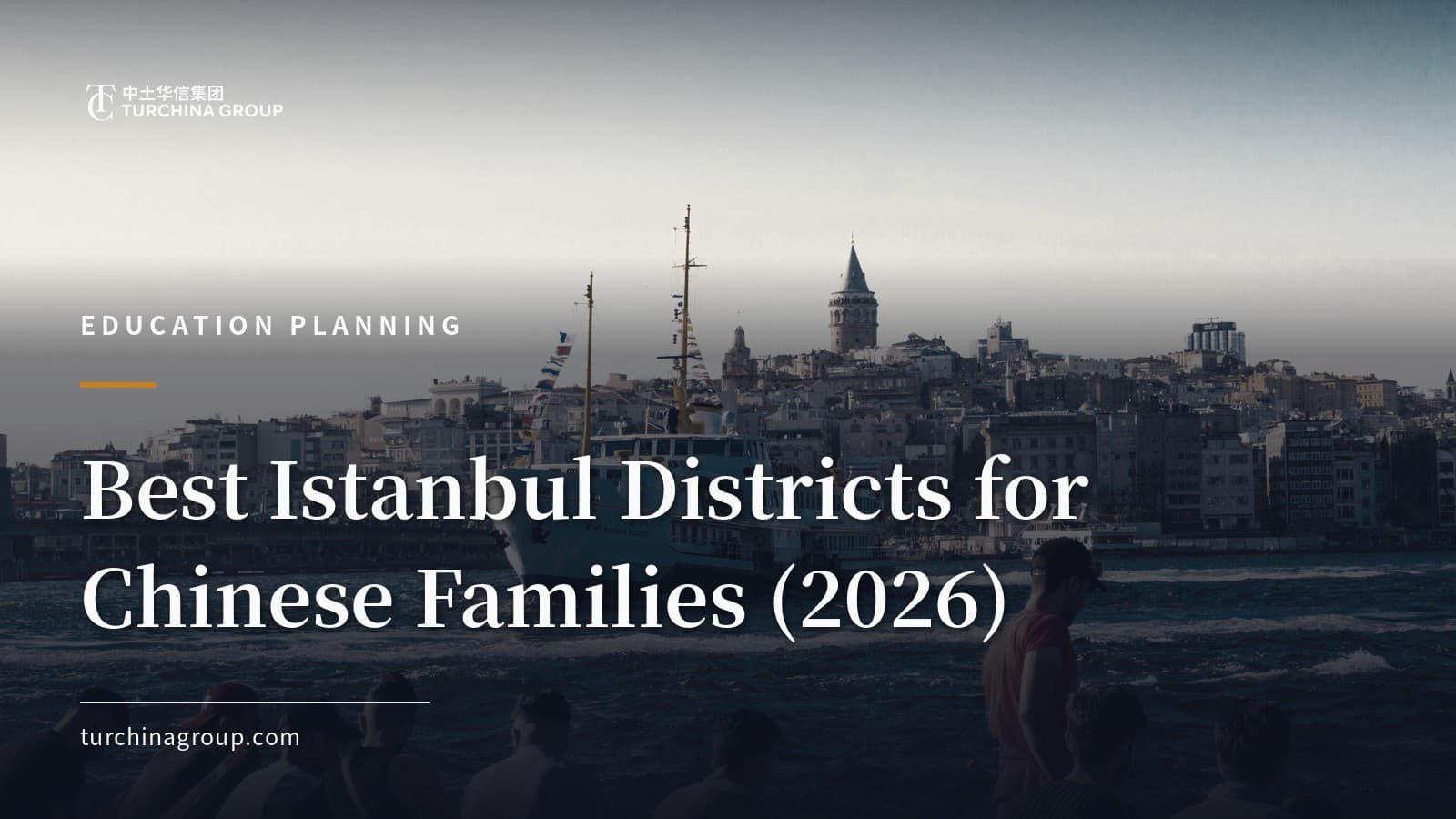
Choosing among the best Istanbul districts for Chinese families, as of this writing (August 2026), means balancing three things: your child's school, your daily commute, and the feel of the neighborhood. If an international school comes first, the European side around Beşiktaş, Sarıyer, and Şişli is most convenient, though rents run high; if you care more about value and everyday livability, the Asian side around Kadıköy and Ataşehir usually stretches your budget further. We take schools, commute, and community in turn below.
Key Takeaways
- As of this writing, the first factor in choosing a district is usually your child's school: most English-language international schools cluster on the European side around Sarıyer and Şişli and on the Asian side near Ataşehir, and campus locations and admissions should be confirmed with each school.
- Core European districts carry higher rents: as of this writing, a two- or three-bedroom flat around Beşiktaş and Sarıyer often runs roughly 30,000 to 70,000 Turkish lira a month, with the real figure set by the market.
- The Asian side offers better value: as of this writing, comparable homes in Kadıköy, Ataşehir, and Üsküdar usually cost less and feel quieter, though prices vary by building age and location.
- Commuting is the hidden cost of any district: the Marmaray undersea rail tunnel and metro help with cross-continent trips, but the Bosphorus road bridges jam at peak hours, so test your route in advance.
- Legal long-term residence requires a valid residence permit: short-term permits are approved by the Directorate General of Migration Management (Göç İdaresi), and their fees, insurance, and address rules can change, so confirm each before applying.
What Are the Best Istanbul Districts for Chinese Families
The best Istanbul districts for Chinese families fall into three groups: upscale business and residential zones on the European side, newer suburban towns also on the European side, and established family neighborhoods on the Asian side. Because Istanbul spans two continents, where you live often comes down to whether you put schools, commute, or budget first. The table below sketches these family districts; treat it as a framework rather than a price list, since actual rents, campus locations, and travel times depend on the situation when you apply.
| District | Side | Best suited to | Character |
|---|---|---|---|
| Beşiktaş / Sarıyer | Europe | School-first families with a comfortable budget | Near several international schools and business zones, high rents, sea views and green space |
| Şişli / Beyoğlu | Europe | Those who value city-center convenience | Transport hubs, full amenities, some areas noisier |
| Bahçeşehir / Beylikdüzü | Europe (new towns) | Those who want newer, larger homes | Many gated communities, plenty of green space, farther from the center |
| Kadıköy | Asia | Those who value culture and everyday life | Mature shopping and dining, good transport, solid value |
| Ataşehir | Asia | Those balancing school and commute | Modern gated communities, near the finance district and international schools |
| Üsküdar / Maltepe | Asia | Those who value quiet and budget | Strong family feel, seaside promenades, friendlier prices |
The table shows common profiles; even within the same district, different complexes vary greatly. What really decides a district is rarely the district itself, but its distance from your child's school and your workplace, the focus of the next three sections.
Schools: How Choosing a School Shapes Your District
For most Chinese families, the child's school is the first factor in choosing a district, because international schools are spread unevenly across Istanbul and the commuting radius frames the homes you can consider. As of this writing, the main English-language and IB international schools cluster on the European side around Sarıyer and Şişli, and on the Asian side around Ataşehir and Kadıköy. Each school sets its own campus, curriculum, and intake, so confirm that year's policy school by school.
The options split into three types: international schools (British, American, or IB curricula, the most expensive, often priced in foreign currency), Turkish private schools for the local upper-middle class, and Turkish-language public schools regulated by the Turkish Ministry of National Education (MEB). If your child will enter the Turkish system, Turkish-language ability is the key threshold, and our Turkish language courses offer A1 to C1 teaching with Mandarin-speaking assistants to help children and parents make the transition.
Many Chinese families treat Istanbul as an education stepping stone and look closely at the Joint Entrance Examination for Overseas Chinese Students (华侨生联考), which calls for clear eyes. That exam sets defined requirements for the candidate's foreign nationality or overseas residency status and for how long the parents have lived abroad, and China does not recognize dual nationality, which has real consequences for schooling, social insurance, and inheritance. There is no shortcut here: the earlier you arrange status, the more options you keep, and eligibility and admission standards follow that year's official rules.
Commute: How Cross-Continent and Same-Side Travel Shape Daily Life
Commuting is the most underrated cost inside any district, because once school and work sit on opposite sides of Istanbul, the daily cross-continent trip drains time and energy. As of this writing, crossing the Bosphorus relies on three road bridges, the Marmaray undersea rail tunnel, and ferries, and the Marmaray plus the metro are usually steadier at peak hours than the bridges, which back up during the morning and evening rush.
Istanbul's metro, buses, ferries, and the Metrobüs bus rapid transit all share the İstanbulkart travel card, so transfers are relatively easy. Our advice is practical: before you lock in a district, walk your real routes to school and work at peak times and measure the door-to-door time. Many families end up putting home and school on the same side, paying slightly higher rent rather than have a child spend two hours or more on the road daily.
Community and Convenience: Chinese Life and Everyday Amenities
The feel of a community decides whether a family settles in comfortably. Istanbul has no concentrated Chinatown like some Western cities, but Chinese food, Asian supermarkets, and the Chinese community are already convenient in several districts. As of this writing, Kadıköy on the Asian side is known for its diversity and street life, Şişli and Beyoğlu on the European side offer full dining and shopping, and newer towns such as Bahçeşehir draw younger families with gated communities and green space.
For Chinese families, check in person whether you can buy Asian ingredients nearby, whether the neighborhood is quiet and safe, whether there are parks and child-friendly spaces, and whether medical care is close (many private hospitals in Istanbul have international departments that serve you in English). Language remains the biggest variable in fitting into a community: daily dealings with utilities, building management, and clinics mostly happen in Turkish, so building basic Turkish early makes settling in smoother.
European or Asian Side: Best Istanbul Districts for Chinese Families
Choosing between the European and Asian sides is the central trade-off among the best Istanbul districts for Chinese families, and the answer depends on whether you put convenience, budget, or lifestyle first. As of this writing, core European districts (Beşiktaş, Sarıyer, Şişli) sit near business zones and some top international schools but carry higher rents, where a two- or three-bedroom flat often runs roughly 30,000 to 70,000 Turkish lira a month. Comparable homes in Kadıköy, Ataşehir, and Üsküdar usually cost less and feel quieter.
Lira rents are noticeably affected by inflation, and at renewal landlords often raise them by reference to the price index published by the Turkish Statistical Institute (TÜİK), so read the annual adjustment clause carefully before you sign.
A practical order is to let your child's school fix the commuting radius first, then pick a complex within it by budget and neighborhood feel, rather than falling for a district and forcing the school to fit. If you have not settled on a school, renting for a year lets you learn both sides before committing to a long-term base.
Renting, Buying, and Residence Status: The Practical Realities
Once you have chosen a district, the next questions are whether to rent or buy and the residence status tied to either, and together they set the cost of settling in Istanbul. As of this writing, if you plan to live here long term, buying is usually more economical than renting for years, and it can also link into status planning. In Turkey, the price and valuation of a home are governed by the system recognized by the Capital Markets Board (SPK), and title is registered at the General Directorate of Land Registry (Tapu).
Our real estate team in Turkey views properties, negotiates, and verifies title on the ground in Istanbul, takes no developer commissions, and can work out the true cost of buying and renting in the district you have chosen.
Whether you buy or rent, living in Turkey long term and legally requires a valid residence permit. Short-term permits are approved by the Directorate General of Migration Management (Göç İdaresi), and an application usually needs proof of address, valid health insurance, and evidence of funds; official fees can change. Our residence permit team assists in Mandarin from first application to renewal, filing a progress report at each milestone so your district decision and your status planning stay connected.
Frequently Asked Questions
Which district in Istanbul is best for Chinese families?
There is no single best district in Istanbul for Chinese families, since the choice depends on your child's school, your commute, and your budget. If an international school comes first, the European side around Beşiktaş and Sarıyer is most convenient; if you value everyday livability, the Asian side around Kadıköy and Ataşehir usually costs less.
Is the Asian side or the European side better for families with children?
For families with children, the Asian side (such as Kadıköy, Ataşehir, and Üsküdar) is usually quieter and better value, with good schools and seaside space. The European side wins on proximity to some top international schools and business zones but costs more, so the final call depends on which side your child's school sits.
Is cross-continent commuting in Istanbul manageable?
Cross-continent commuting in Istanbul is workable but needs planning, and the Marmaray undersea rail tunnel, the metro, and ferries are usually steadier at peak hours than driving across a road bridge. Because the Bosphorus road bridges jam during the rush, test your real route at peak times before choosing a district.
How much does family rent cost in Istanbul?
As of this writing, a two- or three-bedroom flat in core European districts (Beşiktaş, Sarıyer) often runs roughly 30,000 to 70,000 Turkish lira a month, while comparable homes on the Asian side usually cost less. Lira rents track inflation, and at renewal landlords mostly raise them by reference to the Turkish Statistical Institute (TÜİK) price index, so read the adjustment clause before you sign.
When choosing a district, should I settle on the school or the home first?
When choosing a district, you should usually settle on the school first and the home second, because international schools are spread unevenly across Istanbul and the commuting radius directly frames the homes you can consider. Use your child's school to fix an acceptable commuting radius, then pick a complex within that radius by budget and neighborhood feel.
If I want my child in a Turkish public school, does the district matter?
If you want your child in a Turkish public school, the district does matter, because public schools admit by catchment, so your home address affects which school your child can attend. Public schools are regulated by the Turkish Ministry of National Education (MEB) and teach in Turkish, so children usually need to complete a language transition first.
Is there a Chinese community neighborhood in Istanbul?
Istanbul has no concentrated Chinatown like some Western cities, but Chinese restaurants, Asian supermarkets, and the Chinese community are already convenient around Kadıköy, Şişli, and Beyoğlu. Families live spread out rather than in one enclave, connecting through WeChat groups, Chinese business associations, or the parent circles at their children's schools.
Choosing a district for a Chinese family comes down to a clear sequence: lock in your child's school, measure your real commute, then pick a complex with the right community feel within budget. The best Istanbul districts for Chinese families have no single answer, but there is an answer that fits your household. Turchina Group is an Istanbul-based, Mandarin-native cross-border team familiar with the whole process, from viewing homes and choosing schools to residence status. Book a free consultation in Mandarin or English, and we will turn your district decision into a concrete, workable checklist.
Disclaimer: This article is for general informational purposes only and does not constitute legal, tax, immigration, or investment advice. Policies and figures change; please confirm the current details and your personal eligibility with a qualified advisor before acting.