10 July 2026 · Turchina Group · 9 min read
Buying Property in Turkey for Schooling: A 2026 Family Guide
Buying property in Turkey for schooling works through status, not addresses. As of this writing (July 2026), see how a home links to residence and citizenship for your child's education.
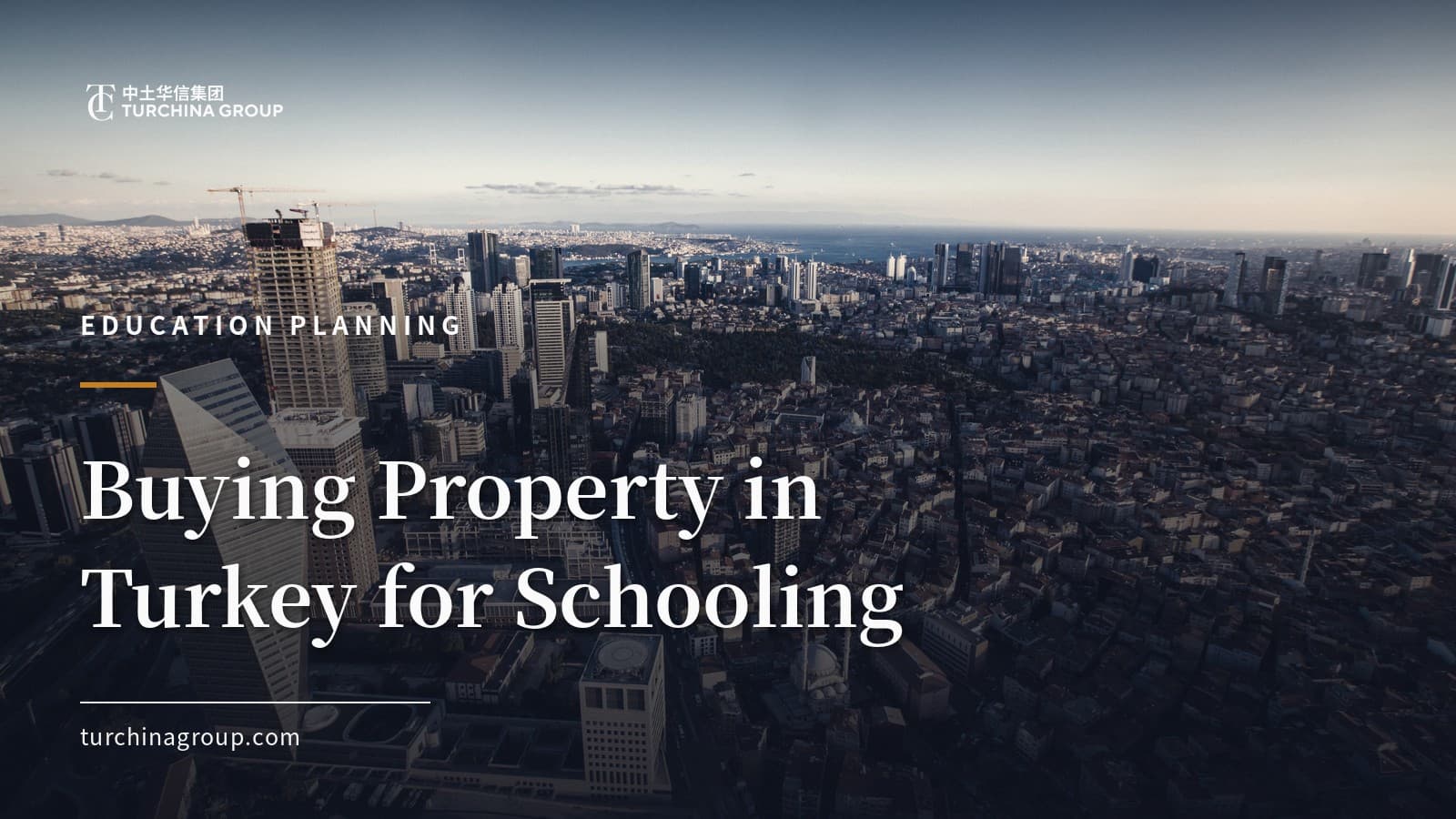
Buying property in Turkey for schooling works through status, not addresses. As of this writing (July 2026), a compliant property purchase settles your family's residence or citizenship status first, and only then can your child enrol in a Turkish public or international school and keep options open for routes such as the overseas Chinese student exam (华侨生联考). This article sets out how property and education actually connect, along with the paths, costs, and risks Chinese families should weigh.
Key Takeaways
- Buying property in Turkey for schooling does not directly assign a school place; it gives you and your child residence or citizenship status, and the education opportunity flows from that status, not from the property itself.
- As of this writing, the citizenship-by-investment property threshold set by the Capital Markets Board (SPK) is around USD 400,000, with the figure fixed by a report from an SPK-licensed valuation firm and the exact standard subject to the rules in force at the time.
- Holding Turkish property can serve as the residential address for a short-term residence application, after which your child can lawfully enrol locally once student or family residence is granted.
- The overseas Chinese student exam (华侨生联考) has clear conditions on nationality and years of residence abroad, and because China does not recognise dual nationality, you should check every point against your own situation with a qualified advisor before planning.
- International school fees, property prices, and taxes vary widely by city and project, so any specific figure should be confirmed before signing against the current terms of the school and the Land Registry (Tapu).
Does Buying Property in Turkey Decide Which School Your Child Attends?
Buying property in Turkey does not directly decide which school your child attends, because Turkey has no property-linked school catchment system. Public school placement follows the child's residential address and the intake arrangements of the Turkish Ministry of National Education (Millî Eğitim Bakanlığı, MEB). International schools recruit and charge annual fees on their own terms.
The role property plays is to provide a stable residential address, support the residence application, and let the whole family settle in one city. The home solves status and a place to live. The school place comes from status plus admission, so the two should be kept separate.
How Buying Property in Turkey for Schooling Links to Residence and Citizenship
Buying property in Turkey for schooling works because the property anchors your residence or citizenship, and it is status, not the deed, that allows enrolment. Three common ways the two connect:
- After you buy or take a long lease on a home, the property address can support a short-term residence permit (issued by the General Directorate of Migration Management, Göç İdaresi). Family members live lawfully and the child gains the right to enrol.
- If the child studies in their own right, they can apply for a student residence permit.
- If the purchase reaches the citizenship-by-investment threshold, the whole family can pursue citizenship by investment and a Turkish passport, giving more stable status and wider options.
If you are still weighing buying against renting, our Turkey real estate service models the most suitable way to hold property around your education goals.
Which Paths Can You Choose When Buying Property in Turkey for Schooling?
Three main paths exist when buying property in Turkey for your child's education, each matching a different budget and status goal. They are not mutually exclusive; many families take residence first and consider citizenship later.
| Path | Property requirement (as of writing) | Status | Suits |
|---|---|---|---|
| Purchase plus short-term residence | No fixed threshold, needs a real home and address | Family short-term residence | Testing the ground, controlling budget |
| Student residence | Rent or buy, provide proof of address | The child's student residence | A study-focused move |
| Citizenship by investment | Around USD 400,000 as of writing (per SPK valuation) | Turkish passport for the whole family | Aiming for a passport and long-term status |
Purchase plus short-term residence has the lowest threshold and suits families who want to land first, enrol the child, and then observe. Citizenship by investment settles everything in one step but carries higher capital and compliance requirements.
For the passport route in detail, see our Turkish citizenship by investment service. As of writing, the threshold is around USD 400,000, set by the SPK-licensed valuation report and the rules in force. Residence documents and renewals follow the requirements of Göç İdaresi, so it is wise to fix the status path before you buy.
What Turkish School Options Exist: Public, International, and Language?
Turkey's schools fall broadly into public, private, and international categories, and the language of instruction and fees differ sharply. Public schools charge no tuition, teach in Turkish, and are run by the Ministry of National Education (MEB). This suits families who plan to integrate long term and are comfortable with the child learning Turkish.
International schools mostly teach in English or bilingually, following IB, British, or American curricula. Annual fees vary noticeably by city and school, so confirm the exact amount against each school's current published terms.
Language is the practical hurdle most families ask about first. A child entering the public or local private system usually needs a grounding in Turkish. We offer Turkish language courses built for families and can arrange TÖMER assessment and exam preparation. When choosing a school, visit in person and confirm grade availability and any entrance test before deciding which district to buy in.
Can Buying Property in Turkey for Schooling Connect to the Overseas Chinese Student Exam?
Buying property in Turkey for schooling can preserve the option of the overseas Chinese student exam (华侨生联考), but it is not a shortcut. Every condition must be met in full. The overseas Chinese student exam is a joint admissions exam for overseas Chinese and students from Hong Kong, Macau, and Taiwan, organised by China's Joint Admissions Office (联招办) under rules that may change each year.
Taking recent policy as a guide, an overseas Chinese candidate usually needs long-term or permanent residence status in the country of residence. They must also have actually lived abroad for a set period within the stated years, with the exact duration and criteria fixed by the Joint Admissions Office for that year.
Two points need flagging:
- Timing matters: Obtaining status, arranging residence, and accumulating time abroad all take time. The earlier you plan, the more options you keep.
- Dual nationality: China does not recognise dual nationality. Once a child takes a foreign nationality, it touches school registration, social insurance, and inheritance, so think these through before you decide.
We never promise any exam result. We help you lay out the status and residence timeline clearly.
What Is the Buying Process, Costs, and Common Risks?
The core process of buying property in Turkey runs as follows: choose the home, obtain a valuation, sign the contract, and transfer title at the General Directorate of Land Registry (Tapu ve Kadastro) to receive the title deed (Tapu).
If you take the citizenship-by-investment route, the property must be valued by an SPK-licensed firm and meet the threshold of around USD 400,000 as of this writing. Compliance conditions such as a no-resale holding period apply, with the final standard set by the rules in force.
Besides the purchase price, expect extras such as transfer tax, notary, translation, and valuation fees. Proportions vary by project, so ask the seller and agent to itemise them before signing.
Common risks include:
- Inflated premiums sold under a school-catchment label
- Unclear title or mortgage status
- Exchange-rate and capital-compliance issues
As a cross-border advisor that takes no developer commission, our Istanbul team runs due diligence and explains title, taxes, and the education fit in writing, so you do not overpay for a vague promise.
Frequently Asked Questions
If I buy property in Turkey, can my child attend public school for free?
Buying property does not by itself mean free enrolment, but it helps the family obtain residence status, after which the child may lawfully attend public school. Turkish public schools are run by the Ministry of National Education (MEB), teach in Turkish, and are generally open to children of foreigners holding lawful residence. The exact places and any entrance test are set by the local school. Language preparation is often the more practical hurdle.
For my child's education, should I choose residence or go straight to citizenship?
This depends on your budget and goal. If you want to land first and control costs, purchase plus short-term residence works. If you are aiming for a passport and long-term status, consider citizenship by investment, where the threshold is around USD 400,000 as of writing, subject to the Capital Markets Board (SPK) valuation report and the rules in force. Many families take residence first and upgrade to citizenship later.
Roughly how much are international school fees in Turkey?
International schools charge annual tuition that varies widely by city and school. Confirm the amount against each school's current published terms rather than relying on a broad figure. When choosing, confirm the curriculum (IB, British, or American), grade availability, and any entrance test, ideally after visiting in person.
Can buying property in Turkey connect to the overseas Chinese student exam?
Yes, but only if you meet the nationality or residence status and years-abroad requirements set by the Joint Admissions Office for that year. China does not recognise dual nationality, so a child taking a foreign nationality raises issues around school registration and social insurance. The earlier you plan the status and residence timeline, the more options you keep.
After I buy a home, how does my child apply for residence?
The child can obtain lawful status through a student residence permit or a short-term residence permit alongside the family, both approved by the General Directorate of Migration Management (Göç İdaresi). The property address serves as one proof of residence. The remaining documents follow Göç İdaresi's current requirements, so plan the purchase and the residence application together to avoid timing gaps.
My child does not speak Turkish. Can they still enrol?
Most public and local private schools need a grounding in Turkish, while international schools may teach in English or bilingually. Before entering the local system, a child usually needs language preparation or an entrance test. We offer family Turkish language courses and can arrange TÖMER assessment to help the child adjust faster.
Overall, how long does buying property in Turkey for schooling take?
The timeline varies by path. A short-term residence application is usually faster, while citizenship by investment and the subsequent passport issuance take longer. The exact period depends on the current processing times of the General Directorate of Migration Management (Göç İdaresi) and related bodies. Because status feeds into enrolment and the years-of-residence rules for the overseas Chinese student exam, the earlier you start, the more comfortable the schedule.
Can you help with viewings and the paperwork?
Yes. Our Mandarin-speaking team in Istanbul provides end-to-end support from school selection, viewings, and due diligence through to title transfer and the residence application. As a cross-border advisor that takes no developer commission, we explain title, taxes, and the education fit to you in writing. You can start by booking a free consultation, and we will propose an approach around your education goals.
If you are considering buying property in Turkey for schooling, our Mandarin-speaking team in Istanbul can map out the property, residence, citizenship, and education paths in one conversation. Book a free consultation in Mandarin or English, and we will give practical advice around your family's situation rather than push a project.
Disclaimer: This article is for general informational purposes only and does not constitute legal, tax, immigration, or investment advice. Policies and figures change; please confirm the current details and your personal eligibility with a qualified advisor before acting.