19 September 2026 · Burak Unal · 9 min read
Earthquake Safety in Turkey: DASK Insurance and Building Checks
Earthquake safety in Turkey protects your money and your family: how DASK compulsory earthquake insurance pays out, plus the building checks to run before you sign.
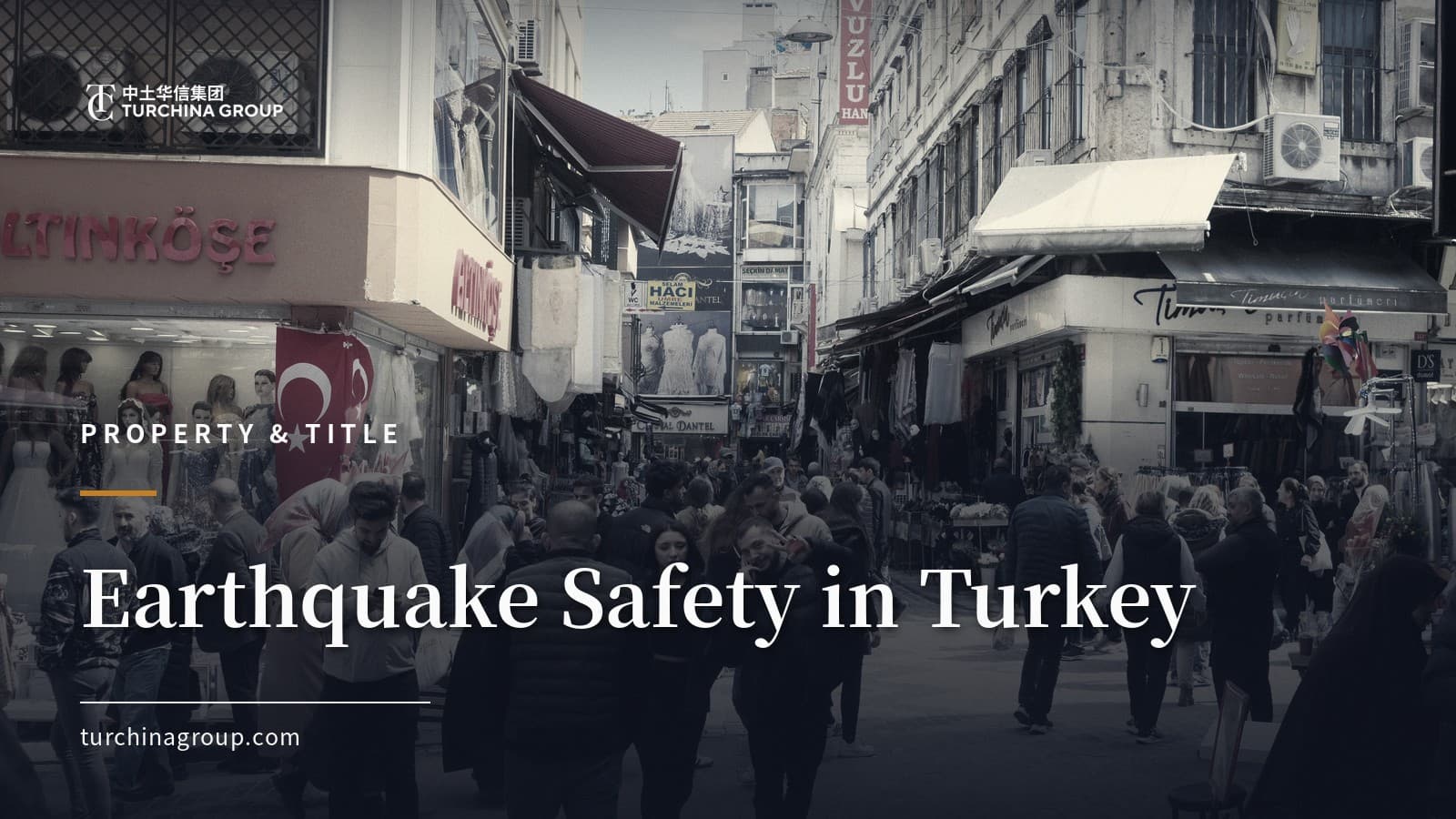
Earthquake safety in Turkey decides whether a property is worth buying at all. This is not something to weigh after the deal closes. Verify the building's age, structural standard and legal paperwork first, then take out DASK compulsory earthquake insurance as the law requires. Neither step replaces the other.
As of this writing (September 2026), the policy administered by DASK (Doğal Afet Sigortaları Kurumu, the Natural Disaster Insurance Institution) is a prerequisite for transferring title and opening utility accounts. It covers only part of a building's structural loss, which is why the building's own quality matters just as much. We are Turchina Group, a Mandarin-speaking team in Istanbul, and below we set out what to do before you close.
Key Takeaways
- DASK compulsory earthquake insurance (Zorunlu Deprem Sigortası) is normally a prerequisite for title transfer (Tapu) and for opening water and electricity accounts, as of writing.
- DASK calculates premiums from floor area, construction type and seismic risk zone using its own tariff, not market pricing, so the figure applies as of the date the policy is issued.
- DASK carries a maximum payout ceiling (adjusted yearly) and covers structural loss only, not contents or full market value, so the gap usually needs separate commercial earthquake cover.
- Buildings completed before 2000 mostly predate the current Turkish seismic code (TBDY 2018), so a licensed civil engineer's structural assessment matters most before you close.
- A missing municipal occupancy permit (İskan), or a building already listed as a "risky structure" (riskli yapı), is a major warning sign to clear before closing.
Why Earthquake Safety in Turkey Must Be Assessed Before You Buy
Assess earthquake safety in Turkey before you pay a deposit. Much of the country sits on active fault lines and a building's seismic performance directly determines both your safety and the asset's ability to hold value. The 1999 Marmara earthquake (İzmit/Gölcük) and the February 2023 Kahramanmaraş sequence both forced the market to reprice older, non-compliant buildings. The earthquake hazard map published by AFAD (the Disaster and Emergency Management Authority) places most of Istanbul and Izmir in medium to high risk zones.
For a cross-border buyer, a home is often the vehicle for an investment, citizenship application or long-term hold. Seismic risk is a safety question and a money question at once. For the wider context on process, taxes and costs, our guide to buying real estate in Turkey as a Chinese investor covers the full picture.
How to Check Earthquake Safety in Turkey Before Closing
Check three things first: the building's age, the code it was built under, and where it sits on the ground. As of writing, Turkey's current seismic design standard is the Turkey Building Earthquake Code (Türkiye Bina Deprem Yönetmeliği, TBDY 2018), which replaced the 2007 and earlier versions. Since 2001, the Building Inspection Law (Law 4708) has required new projects to be supervised by an independent Yapı Denetim inspection company. Here is what each factor tells you:
- Age: Around 2000 is the dividing line. Buildings from before then were mostly not constrained by the modern inspection regime and carry higher risk.
- Structure and materials: Watch for a "soft storey" on the ground floor (street-level shops or wide spans that leave too few columns), signs of sea sand in the concrete, or unpermitted additions.
- Site: Reclaimed land and soft river-valley soils amplify ground motion. A building on such ground can suffer more damage even when built to code.
These signals help you screen out high-risk listings quickly. A firm conclusion requires a professional assessment from a licensed civil engineer.
How to Run an Earthquake Safety Due Diligence Checklist
Earthquake safety due diligence runs two tracks in parallel: document verification and a physical inspection. The document track checks the title register (Tapu), the occupancy permit (İskan / Yapı Kullanma İzin Belgesi) and whether the building appears on any urban-renewal "risky structure" list. The physical track brings in a licensed civil engineer to assess the structure on site. As a licensed Turkish real-estate broker (Emlak Danışmanı), I advise buyers to complete this checklist before paying any large deposit:
- Pull the title record from the General Directorate of Land Registry (Tapu) to confirm the owner, area and permitted use, and to rule out any seizure or mortgage.
- Confirm with the relevant municipality (belediye) that the İskan has been issued and that the use matches the actual property.
- Commission an independent civil engineer for a structural assessment, focusing on columns, beams, foundations and any existing cracks.
- Check whether the building falls within an urban renewal (Kentsel Dönüşüm) area or has been designated a risky structure.
- Verify that a DASK policy exists and that its declared area matches the real property.
If you plan to handle the purchase remotely, write this checklist into the scope of your authorisation; our power of attorney guide for buying property in Turkey remotely explains how. This kind of structural and document review is also a routine part of our Turkey real estate advisory service.
What DASK Earthquake Insurance Is, How to Buy It, and What It Pays
DASK compulsory earthquake insurance is a Turkish legal requirement for residential buildings. DASK (the Natural Disaster Insurance Institution) administers it under Law No. 6305, a national mechanism established after the 1999 Marmara earthquake. As of writing, transferring title and opening utility accounts generally both require a valid DASK policy first.
Taking out the policy is a simple process: apply through an authorised insurer, a bank or an agent, using the property address, area and Tapu details.
DASK pays for structural loss caused by an earthquake (and earthquake-triggered fire, explosion or landslide). Furniture, personal contents and interior finishes are outside its scope. Setting up utilities often also needs a local bank account, so it helps to prepare in advance; our document checklist for opening a Turkish bank account covers what you need.
Is DASK Enough, or Do You Need Commercial Earthquake Cover Too
A single DASK policy does not cover a building's full replacement cost in most cases. Higher-value properties usually need separate commercial earthquake cover as well.
As of writing, DASK carries a maximum payout ceiling that it adjusts each year. The sum insured follows floor area, construction type and seismic risk zone under DASK's official tariff, not market value. A high-priced home may therefore see DASK pay only up to the ceiling, leaving a gap to fill with commercial cover (the earthquake extension within a konut sigortası home policy). The ceiling changes yearly, so treat the tariff DASK publishes when your policy is issued as the authoritative figure. Check your actual sum insured and any shortfall with an advisor before closing.
İskan, Title and Urban Renewal: The Document Side of Seismic Risk
Three documents show whether a property is compliant and safe: the İskan (occupancy permit), the Tapu (title register) and the building's urban-renewal status. A missing occupancy permit often means the building does not match its approved drawings or contains unpermitted work. Such a property is difficult to occupy legally, and its chain of seismic responsibility is unclear.
Turkey identifies and rebuilds "risky structures" (riskli yapı) under Law No. 6306, overseen by the Ministry of Environment, Urbanisation and Climate Change. An older building designated a risky structure may face compulsory demolition, or it may be rebuilt under a renewal scheme. Those two outcomes mean very different things for a buyer, so clear the status before you close. At Turchina Group's Istanbul office, these cross-departmental checks are part of every property transaction we advise on.
How Remote Buyers Complete Earthquake Safety Checks in Turkey
Remote buyers can complete earthquake safety checks through a written authorisation that specifies each check by name. As of writing, a clearly scoped power of attorney (Vekalet) lets you authorise a local advisor to pull the Tapu, verify the İskan, commission an engineer's assessment and arrange the DASK policy, with written conclusions reported to you in Chinese.
List the scope item by item. A vague, open-ended mandate creates its own risk. Buying remotely works, but the seismic and document checks should never be skipped just because you cannot see the site in person.
Frequently Asked Questions
Do I have to buy DASK earthquake insurance to buy property in Turkey?
Yes, buying a residential property in Turkey generally requires DASK compulsory earthquake insurance. As of writing, transferring title (Tapu) and opening utility accounts normally both depend on a valid DASK policy, administered under Law No. 6305. Confirm the exact requirements with an advisor before you close.
What does DASK cover, and what does it not cover?
DASK pays only for structural loss caused by an earthquake and its secondary events (fire, explosion, landslide). Furniture, appliances, finishes and personal contents fall outside the cover. Payouts are capped at DASK's annual ceiling, so any excess needs separate commercial cover.
How is the DASK premium calculated, and can I negotiate it?
DASK sets premiums by official tariff, and the rate cannot be negotiated. As of writing, the calculation depends on floor area, construction type and seismic risk zone, so two homes of the same size in different districts can carry different premiums. The figure applies as of policy issuance.
How do I tell whether an older building is seismically safe?
Commission a licensed civil engineer for a structural assessment. Buildings completed before 2000 predate the current Turkey Building Earthquake Code (TBDY 2018, as of writing) and generally carry higher risk. Pay particular attention to columns, foundations, any soft ground-floor storey and existing cracks.
Can I buy a property that has no İskan (occupancy permit)?
Proceed with caution. A missing İskan is a warning sign, and it is generally unwise to buy before you understand why the permit was not issued. The occupancy permit comes from the relevant municipality (belediye); its absence often means the building does not match approved drawings or contains unpermitted work, affecting legal occupation, financing, resale and seismic responsibility.
What does it mean if a building is listed as a "risky structure"?
A "risky structure" (riskli yapı) has entered the statutory urban renewal (Kentsel Dönüşüm) process. Under Law No. 6306 (overseen by the Ministry of Environment, Urbanisation and Climate Change, as of writing), such buildings may face compulsory demolition and reconstruction. Establish the exact status and timeline before closing.
I am in China. Can I complete the earthquake checks and buy the insurance remotely?
Yes, you can complete the checks and arrange DASK cover through a written authorisation while you are in China. As of writing, a clearly scoped power of attorney (Vekalet) lets you authorise a local advisor to pull the title, verify the occupancy permit, commission an engineer's assessment and arrange the policy, with written feedback in Chinese.
How can Turchina Group help with earthquake checks when I buy?
We coordinate both the document verification and the structural assessment before you close. As a Mandarin-speaking team in Istanbul led by a licensed real-estate broker (Emlak Danışmanı), we cross-check the Tapu and İskan, arrange an independent engineer's assessment, confirm the urban-renewal status and arrange DASK. Each step is reported in writing in Chinese, with the final decision left to you.
Earthquake safety in Turkey cannot be reduced to "I bought DASK, so I am fine." It is the combined result of document compliance, structural assessment and sensible insurance. Do the building, İskan and title checks first, then take out DASK as the law requires and fill any gap with commercial cover. Control the risk before the deal closes, not after. For an earthquake safety assessment and insurance plan for a specific property, book a free consultation in Mandarin or English.
Disclaimer: This article is for general informational purposes only and does not constitute legal, tax, immigration, or investment advice. Policies and figures change; please confirm the current details and your personal eligibility with a qualified advisor before acting.