4 August 2026 · Turchina Group · 10 min read
Turkish Citizenship Through Fixed Capital Investment: 2026 Guide
Turkish citizenship through fixed capital investment requires roughly USD 500,000 in fixed capital (as of writing), while the job creation route requires employment for at least 50 Turkish citizens. Both paths include the whole family.
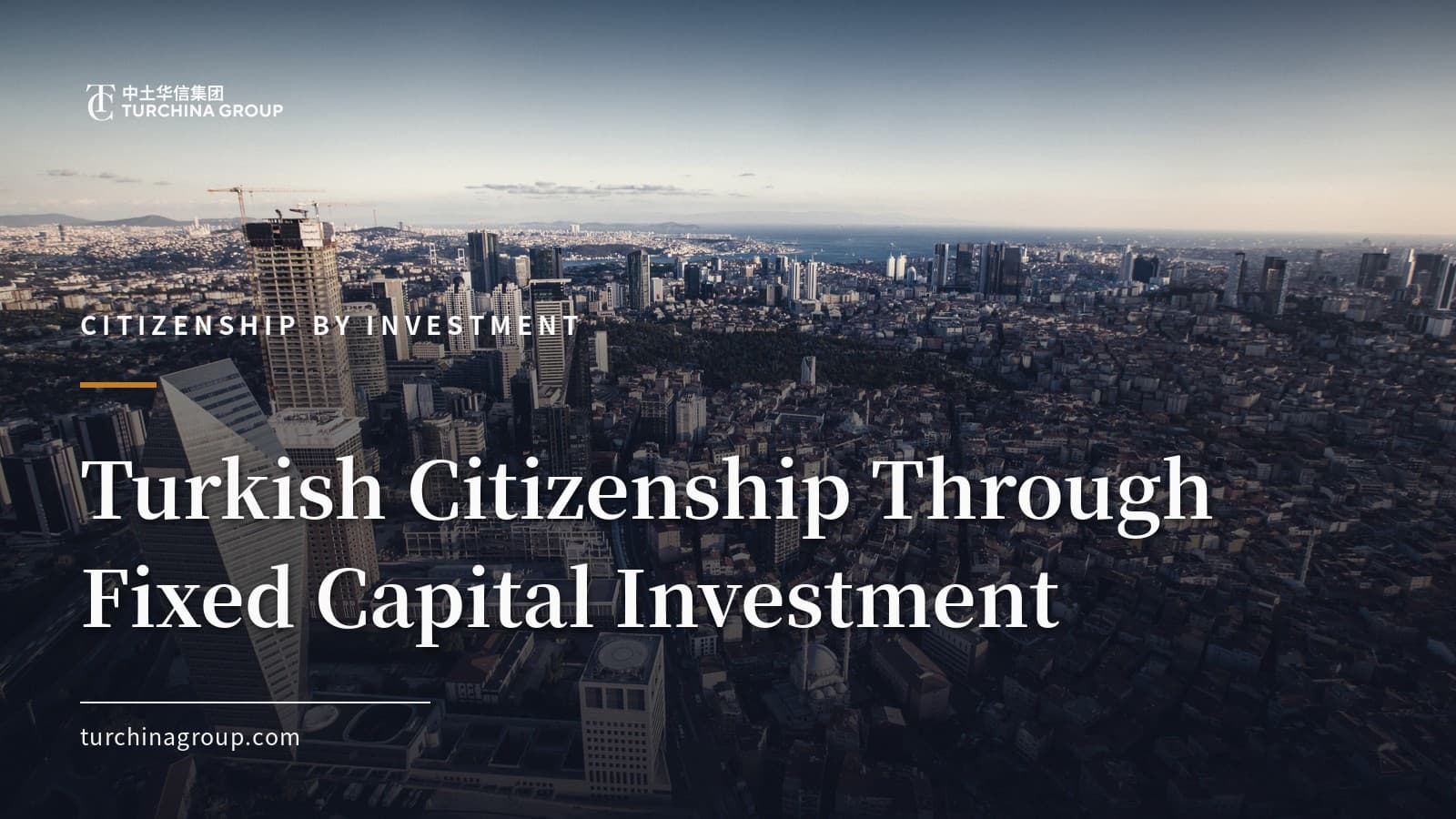
Turkish citizenship through fixed capital investment requires roughly USD 500,000 in fixed capital, confirmed by a compliance certificate from Turkey's Ministry of Industry and Technology. The job creation route, by contrast, asks you to create employment for at least 50 Turkish citizens, confirmed by the Ministry of Labour and Social Security. As of this writing (August 2026), these two paths especially suit business owners and industrial investors who already plan to build a factory, open a company, or run a real operation in Turkey, rather than simply buying property.
Key Takeaways
- As of this writing, Turkish citizenship through fixed capital investment requires roughly USD 500,000 in fixed capital and a compliance certificate issued by Turkey's Ministry of Industry and Technology.
- The job creation route requires employment for at least 50 Turkish citizens, verified through the Ministry of Labour and Social Security and the Social Security Institution (SGK) records.
- Both paths cover the main applicant's spouse and unmarried children under 18, so the whole family applies for Turkish citizenship together.
- Turkey allows multiple nationalities, but China does not recognise dual nationality, so assess the effect on household registration, social insurance, and inheritance before you naturalise.
- These amounts, conditions, and processing times can change with regulation, so treat the figures here as a reference and confirm the current rules with an advisor before you act.
What Is Turkish Citizenship Through Fixed Capital Investment?
Turkish citizenship through fixed capital investment lets you apply for citizenship by placing roughly USD 500,000 or more of fixed capital into a real operating business in Turkey, then obtaining a compliance certificate from the Ministry of Industry and Technology. "Fixed capital" typically means equipment, premises, or registered capital of an operating company, not a purely financial asset. As of this writing, this threshold is set by Turkish regulation.
The right candidate is clear: you already plan to run industry, trade, or manufacturing in Turkey, and you want the investment and the status planning to happen together. Our cross-border team in Istanbul often meets clients who would rather put their money into a company they actually run than buy property to hold. If you do not yet have an entity in Turkey, we usually help you complete company registration in Turkey first, then plan the fixed capital contribution and the compliance certificate around it.
The Job Creation Route: Employment for 50 People
The job creation route lets you apply for citizenship by employing at least 50 Turkish citizens, verified through the Ministry of Labour and Social Security and the Social Security Institution (SGK). As of this writing, the required headcount is 50, set by Turkish regulation, and the proof rests on formal enrolment and contribution records, not a nominal payroll.
For manufacturing, restaurant chains, logistics, or labour-intensive trading, this route tends to fit how you already operate. The real challenge is turning your workforce into a record that can withstand review: formal contracts, monthly social insurance, and bank-paid wages. We look at workforce and status planning together, drawing on investment advisory to weigh which sector and city give you the steadiest footing.
What Are the Requirements for Turkish Citizenship Through Fixed Capital Investment?
Turkish citizenship through fixed capital investment requires roughly USD 500,000 of fixed capital, a compliance certificate from the Ministry of Industry and Technology, and the general conditions every citizenship application must meet. Beyond the investment threshold, the main applicant needs a valid passport, a clean criminal and security record, and must pass the background check.
Who Can Naturalise Alongside the Main Applicant
The spouse and unmarried children under 18 can apply as family members together with the main applicant, exactly as they can on the property route. One qualifying investment usually covers a core family, without a separate investment for each member.
Which Core Documents You Will Need
The file generally includes the investment compliance certificate, company registration and capital documents, the passport, a criminal record certificate, photographs, and notarised, translated China-side documents. The exact list varies by case and should be confirmed with the responsible authority when you file.
How Do These Two Routes Compare With Other Citizenship Paths?
Fixed capital investment and job creation sit alongside the financial routes (property, deposits, and funds) within Turkish citizenship by investment, but they are aimed at industrial investors who intend to run a real business rather than simply hold an asset. The table below sets out the rough thresholds as of this writing and the verifying agency for each main path; all amounts are approximate and can change.
| Citizenship route | Rough threshold (as of this writing) | Verifying / approving agency |
|---|---|---|
| Fixed capital investment | About USD 500,000 in fixed capital | Ministry of Industry and Technology |
| Job creation | Employment for at least 50 people | Ministry of Labour and Social Security / SGK |
| Property purchase | About USD 400,000 in property (held about 3 years, valued via the TCMB system) | General Directorate of Land Registry (Tapu / TAKBIS) |
| Bank deposit | About USD 500,000 on deposit (held about 3 years) | Banking Regulation and Supervision Agency (BDDK) |
| Investment fund units | About USD 500,000 in fund units (held about 3 years) | Capital Markets Board (SPK) |
What the table shows is that the biggest difference between the industrial and financial routes is where the money goes. The financial routes park capital in an asset or product for about three years, while fixed capital investment and job creation require it to enter a real operating business under ongoing ministry review. Which path suits you depends on whether you intend to operate for the long term or simply want the passport by the simplest means, and we compare them line by line during the early consultation for Turkish citizenship by investment.
What Does a Turkish Passport Offer, and What Do Industrial Investors Value Most?
A Turkish passport offers visa-free or visa-on-arrival access to many destinations, and industrial investors especially value how it supports taking a business abroad. As of this writing, Turkish citizens can apply for the US E-2 treaty investor visa, because Turkey is one of the E-2 treaty countries, which is a real channel if you hope to run a company in the United States.
The E-2 is not an immigrant visa or a green card. It requires a genuine, active business investment in the United States and consulate approval, and the outcome depends on the case. For families whose goal is the children's education, a foreign nationality may connect to paths such as the Joint Entrance Examination for Overseas Chinese Students (华侨生联考), but its eligibility carries strict conditions: the child needs the qualifying foreign nationality or residency status, the parents must meet residency-duration requirements, and China does not recognise dual nationality. Planning early is what preserves more options, not treating any path as a shortcut.
The Application Process and Timeline for Turkish Citizenship Through Fixed Capital Investment
The process for Turkish citizenship through fixed capital investment or job creation usually runs in a set order: complete the compliant investment or employment, obtain the compliance certificate from the responsible ministry, apply for a residence permit for naturalisation, then file the citizenship application. For fixed capital investment, that means finishing company formation and capital contribution, applying for the compliance certificate from the Ministry of Industry and Technology, arranging the residence permit, then submitting the citizenship application for final approval. The job creation route follows the same structure, but the certificate comes from the Ministry of Labour and Social Security.
On timing, as of this writing, going from meeting the investment threshold to holding citizenship usually takes several months, with wide variation by case. The pace depends on document completeness, ministry review, and the background check, all of which rest with the authorities, so we do not promise any specific number of days. The whole process touches company, tax, social insurance, residence, and citizenship at once, and cross-border communication and document authentication take time too, which is why our Mandarin-speaking team in Istanbul follows the case throughout and reports back in Chinese at each milestone.
What Are the Risks of Turkish Citizenship Through Fixed Capital Investment?
The main risk is that the compliance review is more continuous than on the financial routes: any flaw in your employment or investment can affect the result. If a workforce is cut sharply after assessment, or social insurance is not paid honestly, eligibility can be affected. If fixed capital does not truly enter the business, the review can stall.
Our advice comes in three parts. First, plan before you invest, designing the company structure, tax, social insurance, and citizenship conditions together to avoid rework. Second, treat every amount and condition as subject to the regulation in force when you file, since the figures here are only a reference as of writing. Third, keep complete, genuine, and verifiable records. As an independent cross-border consultancy, we take no developer commissions and are clear about price, taxes, and risk. For the contract and compliance steps, we bring in China-qualified and Turkey-qualified counsel to provide cross-border legal advisory support.
Frequently Asked Questions
How much do I need to invest for Turkish citizenship through fixed capital investment?
As of this writing, Turkish citizenship through fixed capital investment requires roughly USD 500,000 in fixed capital and a compliance certificate from the Ministry of Industry and Technology. Fixed capital means money placed into a real operating business, not a financial asset, and the amount can change, so confirm it when you file.
How many people do I need to employ for the job creation route?
The job creation route, as of this writing, requires employment for at least 50 Turkish citizens, verified by the Ministry of Labour and Social Security and the Social Security Institution (SGK). Verification rests on formal contracts and monthly social insurance records, not merely a nominal payroll.
Can my family obtain Turkish citizenship together with me?
Yes, the main applicant's spouse and unmarried children under 18 can usually apply for Turkish citizenship alongside the main applicant. One qualifying investment or workforce generally covers a core family, while adult children or other relatives are normally assessed separately.
Is fixed capital investment better than the property route?
There is no absolute better choice; it depends on your goal. If you want to run a real business in Turkey for the long term, fixed capital investment or job creation fits better, while if you simply want the passport by a simpler means and to hold an asset, the property route (about USD 400,000 held for about three years as of writing) is usually more direct.
Can I apply for a US E-2 visa after I get a Turkish passport?
As of this writing, Turkish citizens can apply for the US E-2 treaty investor visa, because Turkey is one of the E-2 treaty countries. The E-2 is not a green card, however; it requires a genuine, active business investment in the United States and consulate approval, and the outcome depends on the case, so it cannot be treated as certain.
I am a Chinese citizen. Will naturalising in Turkey affect my Chinese nationality?
Turkey allows multiple nationalities, but China does not recognise dual nationality, and acquiring a foreign nationality may be treated under Chinese law as an automatic loss of Chinese nationality. This reaches into household registration, social insurance, property, and inheritance, so assess it carefully and consult a China-side professional before you naturalise.
How long does the whole citizenship process usually take?
As of this writing, going from meeting the investment or employment threshold to holding citizenship usually takes several months, with wide variation by case. The timing depends on document completeness, ministry review, and the background check, all held by the authorities, so we do not promise any specific number of days.
I do not have a Turkish company yet. Can I still take these two routes?
Yes, but you usually need to complete company registration in Turkey first, then plan the fixed capital contribution or compliant employment on that basis. We design the company setup, tax and social insurance, and citizenship conditions together to avoid reworking later. The specific arrangement depends on your industry and which city you land in.
If you want to judge whether Turkish citizenship through fixed capital investment or the job creation route suits your situation, book a free consultation in Mandarin or English. Our Mandarin-speaking team in Istanbul will weigh your business plan, family circumstances, and budget against the conditions and risks, and give practical advice. Contact us to begin.
Disclaimer: This article is for general informational purposes only and does not constitute legal, tax, immigration, or investment advice. Policies and figures change; please confirm the current details and your personal eligibility with a qualified advisor before acting.